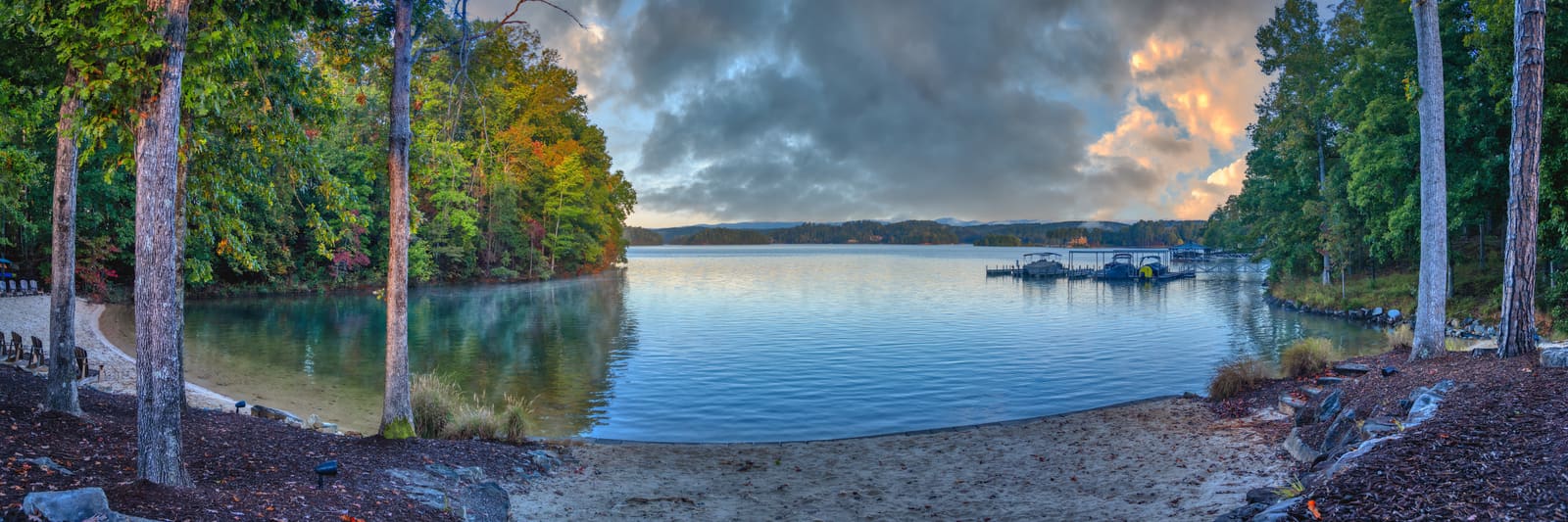
Lake Keowee's 18,500 acres are not all equally valuable. Water depth, cove orientation, view exposure, and travel time to open water vary materially across the lake. This page is a buyer reference for the geographic variables that decide whether a waterfront home delivers the lifestyle you're paying for.
Lake Keowee bathymetry, summer pool, winter pool, and what those numbers actually mean for a homeowner.
Duke Energy operates Lake Keowee at a fairly stable level by reservoir standards, with a typical seasonal range of approximately 4–6 feet between full summer pool and winter drawdown. That stability is one of the lake's most attractive characteristics; many comparable reservoirs in the Southeast operate at 10–15 foot seasonal ranges.
Within the lake, water depth at the shoreline varies dramatically. The dam-side and main-channel sections of the lake hold deep water (40–100+ feet) right to the shoreline; many smaller coves and tributary arms drop to 5–8 feet at the shore at full pond. A 5–8 foot dock site effectively cannot accommodate full-size boats and is a different asset than a 15–40 foot site.
Listing depth claims should always be verified with on-site sounding. Bring or hire a depth-meter survey before signing on a waterfront site — or work with an advisor who has the on-water history to know which coves and which addresses hold which depths.
How geographic orientation drives both view value and day-to-day lake utility.
East-facing waterfront catches sunrise; west-facing waterfront catches sunset. Most buyers prefer west-facing for sunset views over the lake, but west-facing also receives more direct afternoon sun — which can be brutal in July and August. The right answer depends on screened-porch orientation and how much time you'll spend on the dock at peak summer afternoons.
Long open coves with undeveloped opposite shorelines produce premium long-view sites — the view is structurally protected from future development. Tighter coves with dense opposite-shore development have visible neighbor exposure and produce shorter view corridors. Long-view sites carry a price premium that's usually justified by structural protection of the view.
Sites near major lake destinations (Beach Club, marinas, swim coves) get more boat traffic and more visible activity. Sites in quieter lake sections trade lake-activity-density for privacy. The right answer depends on whether you want to be in the activity or watching it from a distance.
A 30-minute conversation is the fastest way to get a confident next step.